DoST requires an amendment to the law allowing recycling of old PHL flags

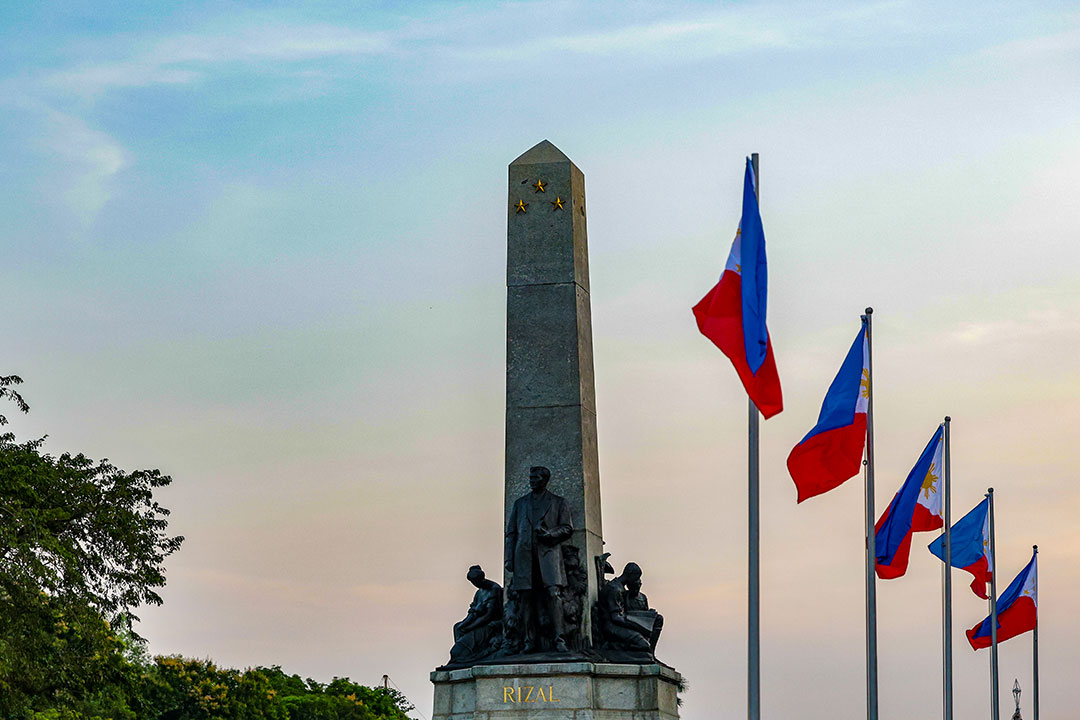
The Department of Science and Technology (DoST) is seeking an amendment to the measure that would allow for the recycling of worn Philippine flags, instead of the traditional incineration method that emits large amounts of greenhouse gases.
Under the Flag and Heraldic Code of the Philippines, a flag that has worn out due to age must be “deeply burned to prevent abuse or desecration,” and its ashes must be buried.
However, this method was found to be harmful to the environment as nylon, a petroleum-based synthetic material from which most current flags are made, emits greenhouse gases such as carbon dioxide (CO₂) and nitrous oxide—emissions about 300 times stronger than CO₂—when burned, DoST said in a statement.
A 3 × 5 nylon flag weighing 300 grams can release about 0.72 kilograms of CO₂ when burned, which is equivalent to a car traveling about 3 to 4 kilometers.
Once buried, synthetic waste breaks down into microplastics that can persist in soil for 30 to 40 years, the agency said.
While this approach shows patriotic respect, the DoST has noted that it conflicts with the country’s environmental and sustainability laws, such as the Clean Air Act and the Solid Waste Management Act.
DoST Secretary Renato U. Solidum Jr. he said he hopes that Republic Act No. 8491 will be amended so that this fabric can be used for other purposes, emphasizing the country’s push for a circular economy.
“I hope the flag will not be destroyed by burning, as its threads can still be used. We have to show that this can still be used for other purposes,” Mr. Solidum told reporters during the disposal ceremony of the old Philippine flag on Tuesday in Filipino.
“That’s what we want to change,” he added, referring to the amendment that the agency intends to push to the current law.
The DoST-Philippine Textile Research Institute (PTRI) seeks to specifically amend Section 14 of RA 8491 to establish an honorable and certified recycling process to restore flag textile materials while preventing misuse or contamination.
The process will be institutionalized and certified by the National Historical Commission of the Philippines (NHCP).
DoST-PTRI suggests that the found threads can be repurposed into medal ribbons, ceremonial threads, official government cloths, and possibly newly produced flags.
This proposed amendment also requires the modernization of the flag’s color specification, derived from the 1900s American color system, to internationally recognized color values that are more consistent with modern and sustainable dyeing technology.
It is also necessary to consolidate the flag quality inspection authority under the DoST-PTRI to establish a single, auditable certification system for all Philippine flags produced using public funds.
With the proposed amendments, the withdrawal of the Philippine flag will show both an act of respect and responsibility to the environment that the nation has sworn to protect, the DoST said. – Edg Adrian A. Eva


