Colonel Nashid Salahuddin on Developing Future Leaders in the Air Force

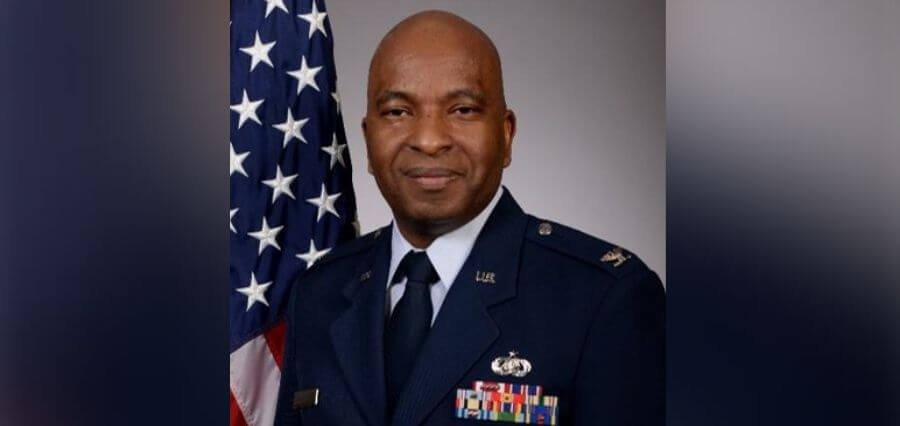
Colonel Nashid Salahuddin has spent more than three decades in uniform preparing for the challenge that defines modern military leadership: developing leaders who can operate with unmistakable confidence while delivering measurable readiness today.
Now serving as the Air National Guard’s Director of Personnel at Joint Base Andrews, Colonel Nashid Salahuddin oversees the human resources strategy that supports nearly 1,800 military personnel and civilians at the headquarters. His work is clear and strategic. He ensures that the right people are in the right positions at the right time, maintains a fully trained and ready workforce, and intentionally develops leaders for both current missions and future conflict situations.
That goal reflects a positive belief: preparedness is created by people long before it is tested in practice.
Leadership of Ambiguity, Not Just Compliance
The Air National Guard operates at both the state and national levels to respond to domestic events while also ensuring that force is projected globally for the benefit of the US. To accomplish both tasks well, leaders must think more than just using checklists or doctrines when performing their daily tasks.
Colonel Nashid Salahuddin has developed his own philosophy of leadership through flexibility and situational awareness. His experience includes starting as an airman at age 18 in 1990 becoming a commissioned officer at age 24 in 1996 before completing various operational commands and assignments with the Office of the Secretary of War (Pentagon). This wealth of experience has taught him that no two groups are the same and any problem is different from the others.
For example, in one of Colonel Salahuddin’s most important moments of leadership development, he was sent to Iraq, where he served for six months as a Senior Advisor to the MoI (Ministry of Interior). He led with influence (without authority) so that he could unite the goals of the Coalition and Sovereign Partners without anyone under him. To succeed in this endeavour, he relied heavily on his honesty and cultural understanding, as well as polite listening. From this experience, Colonel Salahuddin’s guiding principle is to develop future-ready leaders who can lead without authority.
Additionally, Colonel Salahuddin uses this philosophy to develop future-ready leaders by embedding their professional development into the organization’s mission. Bridging the gap between performance and development was achieved by tracking the professional development of individuals, in relation to work. Assignments create an opportunity to challenge one’s personal judgment against one’s professional competence. The response is both objective and ongoing. Training is expected.
Ultimately, Colonel Salahuddin’s goal is to create an organization that can adapt to complex situations; rather than just being trained.
Development as a Preparedness Strategy
In his current role, Colonel Nashid Salahuddin treats human resources strategy as a readiness exercise, not an administrative requirement. That vision produced measurable results.
After examining the headquarters hiring process through the lens of his Six Sigma Black Belt training, he led the process to improve the time to fill vacancies by nearly 50 percent, reducing times from six to three months. The result was not successful because of it. The rapid placement of qualified personnel in key mission positions directly strengthened operational readiness.
These efforts reflect a consistent view: leadership development and mission achievement are interdependent.
Senior leaders often feel a tension between the needs of immediate readiness and the long-term investment of talent. Colonel Nashid Salahuddin does not see these as competing priorities. Organizations that neglect development in pursuit of short-term results end up underestimating their potential. For that reason, he integrates teaching, extending assignments, and sequencing directly into the workflow.
Data-Informed, People-Centered Leadership
The management of today’s military personnel generates a large amount of data. Retention patterns, assignment timelines, performance metrics, and statistical trends provide valuable insight into employee health. Colonel Nashid Salahuddin considers data important, but not complete by itself.
Data establishes fundamentals and reveals trends. It highlights storage challenges, recruitment pressures, and uneven development paths. Strengthens transparency in promotion and assignment decisions. However, the data do not fully explain morale, motivation, or trust.
For that, leaders should be directly involved.
He combines value analysis with ongoing dialogue. Interviews with Airmen and civilians, 360-degree feedback, and structured forums provide context that dashboards cannot. The combination of evidence and engagement allows for measurable and humane policy adjustments.
This approach also reinforces impartiality. Clear criteria and documented performance data reduce bias and build confidence in the process. In an institution that depends on trust, that legitimacy is important.
His leadership philosophy balances systematic process improvement with genuine concern for the people in those processes.
Sequential Programming and Bench Rigidity
Preparing tomorrow’s leaders requires more than strong human performance. It requires deliberate sequencing and institutional depth.
Colonel Nashid Salahuddin assesses the effectiveness of human capital across several dimensions: indicators of readiness, quality of maintenance, levels of involvement, and capacity for succession. The important question is not just whether the vacancy can be filled today, but whether qualified successors are being prepared for critical roles five and ten years from now.
He encourages a wide range of development. Junior officers and enlisted personnel are called upon to perform a variety of duties that extend beyond the specialty. Exposure to operational, strategic, and managerial domains creates leaders who can think systems, a skill needed in complex environments.
His personal work reflects that philosophy. From serving as Inspector General and Commander of the Mission Support Group to holding senior strategic roles at the Pentagon, he has worked at both the field and business levels. That experience informs his insistence that future leaders must understand both strategic execution and institution building.
Bench power is not there by accident. It was built on purpose.
Cross-Generational Insight into Institutional Discipline
While his work has focused on institutional programs, one lasting influence has shaped his leadership philosophy: the example of his father, whose 87-year journey is documented in a book. Pilgrimage. The reference is contextual rather than promotional. It shows lessons about resilience, integrity, and sustainable leadership through social change.
From that example, Colonel Nashid Salahuddin internalized the importance of moral stability in changing environments.
Ethical leadership, in his practice, works. It requires clarity of standards, consistency in accountability, and a willingness to enforce results appropriately. It means doing the right thing even when oversight is limited. In more complex situations where supervision cannot reach all decisions, the actor becomes a control mechanism.
Cross-generational insight also informs how you approach workforce development. Young Airmen offer technical fluency and a fresh perspective. Senior leaders provide institutional memory and depth of situation. He creates platforms where these ideas converge, accelerating innovation while preserving knowledge.
Change is constant. Principles endure.
Institutional Leadership Beyond Personal Recognition
Colonel Nashid Salahuddin does not report the development as a personal achievement. Recognition, in his opinion, represents collective accomplishment. Leaders who focus too much on individual recognition undermine trust. Leaders who elevate teams strengthen performance.
This perspective shapes how you measure impact. He sees stronger organizations at the end of his tenure than at the beginning. He looks for mature leaders, effective programs, and policies that are closely aligned with the needs of the mission.
He does not emphasize inheritance. He emphasizes stewardship.
That mindset is critical as the Air National Guard adapts to emerging realities, including domestic response needs and superpower competition. The environment needs leaders who can combine strategic thinking with smart people management, modernize systems without losing sight of people, and maintain moral clarity under pressure.
Colonel Nashid Salahuddin’s career progression, from enlisted Airman to colonel and from area commander to headquarters director, shows a consistent focus on building strength in others.
Preparing Leaders for the Unpredictable
The main challenge in military leadership development is not predicting specific threats. It prepares leaders to work effectively with uncertainty.
Colonel Nashid Salahuddin cultivates flexibility of mind by encouraging leaders to question ideas and seek different perspectives. It builds resilience by enabling emerging leaders to tackle difficult assignments with the right training and support. He strengthens the moral foundation by maintaining that integrity is non-negotiable, regardless of the time of work.
He does not promise certainty. He prepares to falter.
As Director of Air National Guard Human Resources, his mission remains straightforward: to put the right people in the right positions at the right time, ensure they are fully trained and ready, and intentionally develop leaders who can meet today’s needs and tomorrow’s challenges.
Aircraft, technology, and strategy remain important. Yet without leaders who can think clearly, adapt quickly, and act with integrity, none of those assets reach their full potential.
Colonel Nashid Salahuddin built his career on a disciplined conviction. Readiness begins long before shipping orders are issued. It starts with people who are ready not just to act, but to think, adapt, and lead.


