The approved DepEd trimester plan is not ready, teachers’ groups say

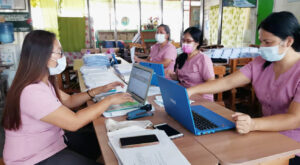
Teachers’ groups on Friday criticized the preparation and implementation of the school year (SY) 2026-2027 trimester plan, following its approval by the Economic and Development Council (ED).
“It was already said that this needs to be consulted, but in the end, it is still being approved quickly,” Alliance of Concerned Teachers (ACT) Chairwoman Ruby Bernardo said in a Filipino statement on Friday.
“The task of putting together the missing policy should not be transferred to those in their own areas,” he added.
The ED Council, during its 8th meeting chaired by President Ferdinand R. Marcos Jr., approved the three-term school calendar of the Department of Education (DepEd) on Thursday.
This policy is considered “an important step to improve the educational results of the country”, according to the Department of Economy, Planning, and Development (DEPDev).
“Our commitment to developing a globally competitive workforce begins with providing evidence-based solutions to close the educational gaps in our country,” DEPDev Secretary and ED Council Vice Chairman Arsenio M. Balisacan said in a statement.
“We commend the DepEd (Department of Education) for continuing to pursue programs that support development priorities,” he added.
DEPDev noted that the policy emphasizes continuing education, reducing classroom disruptions caused by natural disasters, celebrations, and festivals.
Data from the Second Congressional Commission on Education (EDCOM 2) revealed that 53 instructional days were lost in SY 2023-2024 due to disasters, holidays, non-instructional activities, and jobs.
“By moving from a four-period schedule to a three-period schedule, students will benefit from longer, uninterrupted blocks of study, stabilizing their learning speed and recovery each term,” DEPDev said in a statement.
However, the ACT called the decision a “quick upward trend”.
The group urged DepEd to stop its implementation and conduct genuine consultations with teachers’ unions and education stakeholders.
The new policy was also compared to K to 12, emphasizing the lack of readiness during its implementation.
“It will definitely fail, and we in the schools will be left to develop and fix all the problems,” said Ms. Bernardo. “And when it fails, we are the ones to blame again.”
On the other hand, the Teachers’ Dignity Coalition (TDC) insisted that the assessment test should be done before the release of the new school calendar across the country.
“We hope that there will be deep and wide-ranging discussions with the stakeholders,” TDC National Chairman Benjo G. Basas said in Filipino in a video statement on Friday.
“We hope that before they use it, there will be a pilot in one region, as we need to measure many aspects, including forms and materials,” he added.
Under the proposed trimester system, the school year would be divided into three terms. Each term consists of an opening block, an instructional block, and an enrichment block.
The opening block, or first week of classes in the first term, will focus on orientation and assessment.
Each term will consist of a teaching block lasting 54 to 61 days, followed by a two-week enrichment block for preparation and improvement, grading, assessment, and preparation of school forms, and medical leave.
The first term will run from June to September, the second from September to December, and the third from January to March. – Almira Louise S. Martinez


