Why Amazon’s second shot at a smartphone might not be as crazy as it sounds


When Reuters reported on Friday that Amazon was working on a new smartphone, the reaction was obvious: Didn’t they try this? And it didn’t go spectacularly wrong?
Yes, in both aspects. The Fire Phone, launched in 2014 when Jeff Bezos was still running the company, lasted 14 months and resulted in $170 million in revenue.
It was full of gimmicks, including a 3D display and a camera feature that recognizes products and lets you buy them on Amazon. It may be the biggest example of Amazon failing to live up to its famous customer-first and back-to-back rhetoric.
But to dismiss Amazon’s new effort, code-named “Transformer,” as a sequel to that disaster misses the point. This isn’t Amazon trying to remake 2014. Amazon is looking at the state of AI and betting that the shift to AI will fundamentally change what a mobile device is, and that the dominant smartphone makers may not be the ones leading that charge.
Apple and Samsung together command about 40% of smartphone sales worldwide, but their latest devices have been incremental improvements, not breakthroughs. No company is leading the way in AI the way OpenAI, Anthropic, Microsoft, and Amazon themselves are.
A growing number of companies are already trying to exploit that gap. OpenAI is working with former Apple design chief Jony Ive on a dedicated AI device. Meta is pushing its Ray-Ban smart glasses as an alternative to taking out your phone.
Previous attempts at standalone AI gadgets, such as the Humane AI Pin and the Rabbit R1, have rivaled the Fire Phone as flops in their own right, but show the potential of an AI device.
This is where Amazon could see an opening.
The project is under ZeroOne, a year-old group within Amazon’s devices unit with the mandate to create “breakthrough” gadgets, according to Reuters. It is led by J Allard, the former Microsoft executive behind the Xbox and the Zune music player, who joined Amazon in 2024, as GeekWire first reported.
The phone is considered an AI-driven personal device that syncs with Alexa and may bypass traditional app stores altogether. That idea would have been science fiction a few years ago, but it sounds increasingly plausible in an era where AI agents represent the user without ever opening an app.
The company, for the record, does not comment on any of this. The project is still early, with an unspecified timeline, and Reuters noted that it could still be scrapped.
Amazon isn’t even close to wireless carriers, according to the report.
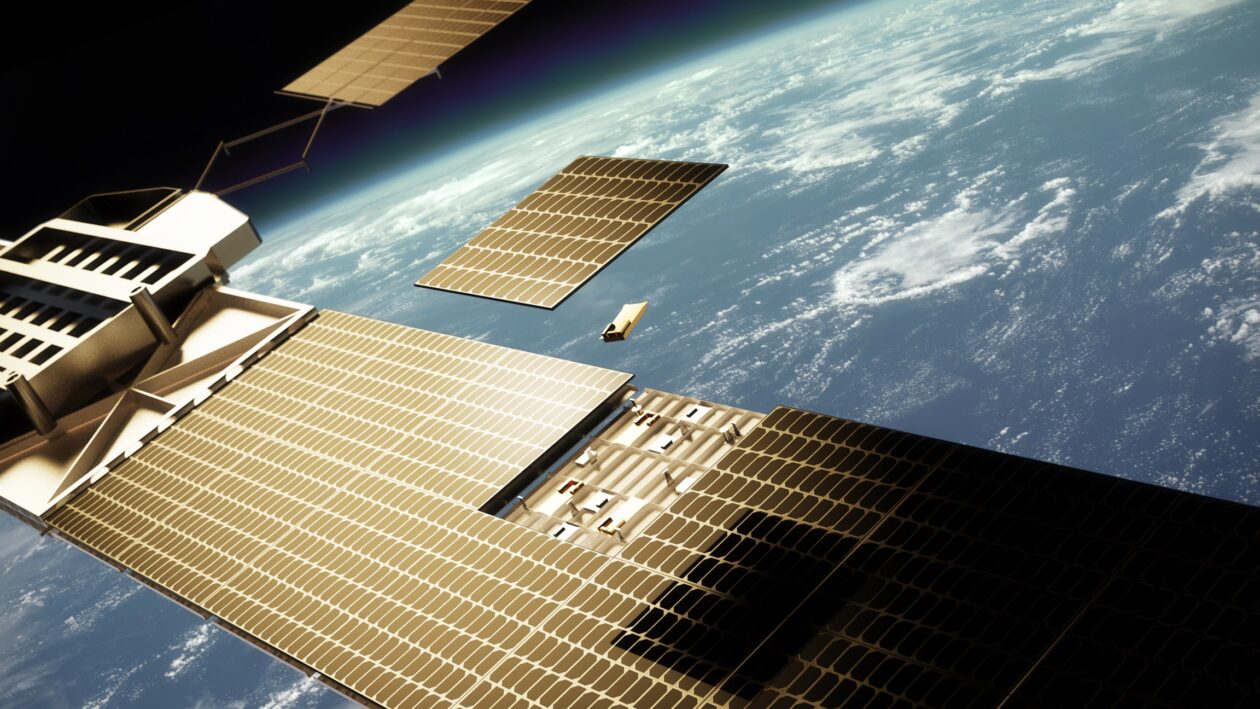
But those details actually raise an interesting question. Amazon’s Leo satellite internet initiative, formerly known as Project Kuiper, sits in the same category of Devices and Services as the new phone project, all under the umbrella of Panos Panay, another former Microsoft executive. Those satellites can provide wireless connectivity directly to devices, potentially bypassing traditional carriers entirely.
There is no indication that the two efforts are connected, but it would make a lot of sense.
Then there’s Amazon Sidewalk, an existing mesh network protocol that uses Echo and Ring devices to create a low-bandwidth wireless network.
Between satellites on the surface and Sidewalk on the ground, Amazon has been building an infrastructure that can support a device like this without involving a traditional company.
In the new phone project, Amazon tested both a regular smartphone and a stripped-down “dumbphone” with limited features, according to a Reuters report. It considered positioning a lighter version as a companion device that customers would carry alongside their existing iPhone or Galaxy. One inspiration is reportedly the Light Phone, a minimalist handset with a camera, maps, and not much else, sold for around $700.
During the development of the original Fire Phone, two internal teams argued over direction: a low-cost, stripped-down device versus a high-end feature-packed phone, as noted in the great “Version History” podcast by The Verge. Bezos allied with the upper camp, and failed.
In this case, Amazon seems to be testing both methods at the same time.
It is also worth noting the conventional wisdom that this type of hardware bet is not in Amazon’s case under CEO Andy Jassy, who succeeded Bezos. Jassy spent most of his time restructuring the company and cutting projects that weren’t working.
But the goal of that effort isn’t to avoid big bets, to remove management and make Amazon more gentle and deliberate when it makes them. Creating a dedicated hardware team with a mandate to “win” and staffing it with a seasoned product leader is a testament to that.
Ultimately, the fact that Amazon is willing to revisit its most painful hardware failure shows how seriously it takes the idea that AI has the potential to change what a mobile device can be.
This clip is taken from a conversation between Todd Bishop and John Cook on this week’s GeekWire Podcast. Listen above, or subscribe on Apple, Spotify or wherever you listen.