AI Personal Assistants in 2026: How Smart AI Is Becoming Your Digital Second Brain

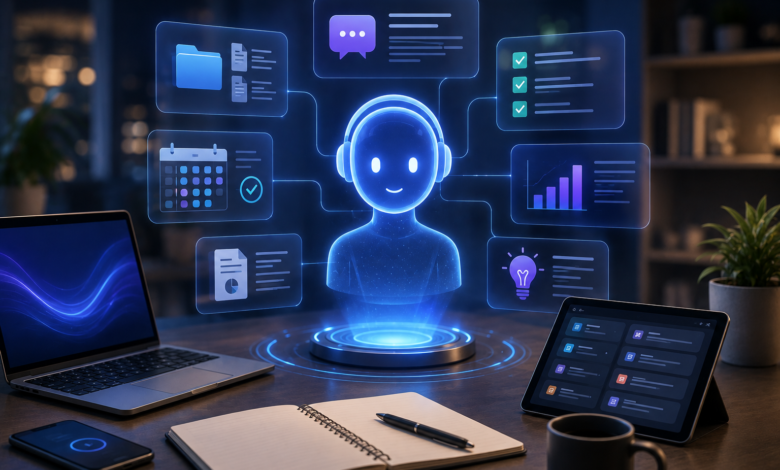
AI Personal Assistants in 2026: How Smart AI Is Becoming Your Digital Second Brain
Artificial intelligence is becoming increasingly integrated into everyday digital life. In 2026, AI personal assistants are moving beyond simple voice commands and basic chatbots. They are becoming more capable of helping people organize information, manage tasks, research topics, write content, and make everyday work more efficient.
This evolution is creating a new concept: the digital second brain.
Instead of relying entirely on memory, notebooks, browser bookmarks, and dozens of disconnected apps, people can increasingly use AI to organize and interact with their digital information.
What Are AI Personal Assistants?
AI personal assistants are software tools that use artificial intelligence to help users complete tasks and access information.
Traditional digital assistants could perform relatively simple commands, such as setting alarms, checking the weather, or sending messages.
Modern AI assistants can handle much more complex requests. Depending on the platform and available integrations, they can help users:
- Research topics
- Summarize documents
- Write and edit content
- Organize tasks
- Analyze information
- Create plans
- Brainstorm ideas
- Answer questions
- Extract information from files
- Assist with repetitive workflows
The important change is that users can communicate with these systems using natural language rather than learning complicated software commands.
Why AI Is Becoming a Digital Second Brain
People consume enormous amounts of information every day.
Emails, documents, websites, notes, messages, meetings, articles, and social media posts can quickly become difficult to manage.
A digital second brain powered by AI can help turn this information into something easier to search and understand.
For example, instead of remembering where you saved an important note, you could potentially ask an AI assistant:
“Find the information I saved about my website project last month.”
The assistant could then help locate and summarize the relevant information, depending on the data and integrations it has access to.
This can reduce the mental effort required to remember every small detail.
1. AI Can Help Organize Your Daily Tasks
One of the simplest applications of AI personal assistants is task management.
Instead of manually creating individual tasks, users can describe what they need to accomplish.
For example:
“I need to finish the website homepage, review three emails, prepare tomorrow’s meeting notes, and publish a blog post.”
An AI assistant can help turn these requirements into an organized task list.
More advanced systems may also help prioritize tasks based on deadlines, importance, or available time.
2. AI Can Help With Research
Research can consume hours, especially when information is spread across many sources.
AI personal assistants can help users understand complex subjects by:
- Summarizing long documents
- Explaining technical concepts
- Comparing information
- Identifying important points
- Creating research outlines
- Generating follow-up questions
For example, a freelancer researching a new industry could ask an AI assistant to explain the major trends, common customer problems, and important terminology.
Users should still verify important information because AI can make mistakes.
3. Your AI Assistant Can Help Manage Information
A second brain is valuable because it helps organize information that would otherwise be difficult to remember.
AI can potentially help categorize:
- Notes
- Documents
- Ideas
- Project information
- Research
- Meeting summaries
- Business information
- Personal reminders
Instead of searching through multiple folders, users may increasingly interact with their information through natural-language questions.
4. AI Meeting Assistants Are Becoming More Useful
Meetings generate a large amount of information.
AI tools can help turn conversations into useful records by producing summaries, identifying action items, and organizing important discussion points.
For example, after a business meeting, an AI assistant could help create:
Key decisions
Tasks
Deadlines
Follow-up questions
This can reduce the need to manually write down everything discussed.
5. AI Can Improve Writing and Communication
AI personal assistants are also becoming useful writing partners.
They can help users:
- Draft emails
- Improve grammar
- Rewrite unclear sentences
- Summarize long messages
- Create reports
- Brainstorm headlines
- Adjust writing tone
- Translate content
For professionals, this can significantly reduce the time required for routine communication.
The user remains responsible for reviewing the final content before sending or publishing it.
6. AI Can Help With Personal Productivity
Productivity is not simply about completing more tasks. It is also about reducing unnecessary mental effort.
AI assistants can help users organize their day by turning large goals into smaller actions.
For example, instead of asking:
“How can I grow my website?”
a user could ask:
“Create a practical weekly plan for improving my website’s content, SEO, and social media promotion.”
The AI can then help turn a broad objective into actionable steps.
7. AI Assistants Can Remember Context
One of the most important developments in AI assistants is improved contextual understanding.
Rather than treating every conversation as completely separate, some AI systems can use relevant previous information or connected data to provide more personalized assistance.
This can make interactions feel more natural.
For example, an AI assistant working with project information may understand the background of a project and help continue the work without requiring the user to explain everything again.
However, users should understand what information an AI system stores and how that information is used.
8. AI Agents Can Go Beyond Conversations
The next major step is the transition from AI that answers questions to AI that performs tasks.
AI agents are designed to complete multi-step workflows with less manual intervention.
For example, an AI agent might potentially:
- Research a topic.
- Organize the information.
- Create a draft.
- Prepare supporting material.
- Ask the user for approval.
- Complete an approved action.
The exact capabilities depend on the software, integrations, permissions, and security controls.
This could make AI personal assistants much more useful for business and professional workflows.
AI Personal Assistants for Business Owners
Small businesses can potentially benefit significantly from AI assistants.
A business owner may use AI to help with:
- Customer communication
- Market research
- Content planning
- Meeting summaries
- Data analysis
- Project management
- Marketing ideas
- Administrative tasks
Instead of hiring separate tools or spending hours on repetitive work, businesses can increasingly use AI to support multiple areas of their operations.
AI Personal Assistants for Freelancers
Freelancers can also use AI as a productivity partner.
For example, an AI assistant can help with:
- Client communication
- Proposal drafts
- Project planning
- Content creation
- Research
- Task organization
- Meeting notes
- Idea generation
This can allow freelancers to spend more time on high-value work and less time on repetitive administrative activities.
AI Personal Assistants and Privacy
The idea of a digital second brain raises an important question: How much personal information should an AI assistant have access to?
The more information an assistant can access, the more useful it may become. But greater access can also increase privacy and security concerns.
Users should consider:
- What information is being stored?
- Which applications are connected?
- Who can access the data?
- Can information be deleted?
- How is sensitive information protected?
- What permissions does the AI have?
Users should avoid giving unnecessary access to sensitive information and should review privacy and permission settings regularly.
Can AI Replace Human Memory?
AI can help people remember and organize information, but it should not be treated as a perfect replacement for human memory.
AI systems can misunderstand context, retrieve incorrect information, or generate inaccurate answers.
A better approach is to think of AI as an external productivity layer.
You remain responsible for important decisions, while AI helps organize information and reduce repetitive mental work.
The Future of AI Personal Assistants
The future of AI personal assistants in 2026 and beyond is likely to involve deeper integration with everyday software.
Instead of opening separate applications for every task, users may increasingly interact with one intelligent assistant that can coordinate information across multiple services.
Imagine starting your day by asking:
“What should I focus on today?”
Your AI assistant could potentially consider your calendar, tasks, projects, messages, and deadlines and provide a prioritized overview.
With appropriate permissions, it could then help you work through those tasks.
This could fundamentally change how people interact with computers.
How to Start Using AI as Your Digital Second Brain
You don’t need a complicated system to get started.
Step 1: Choose One AI Assistant
Start with an AI tool you already use rather than trying several systems at once.
Step 2: Identify Repetitive Tasks
Look for tasks that consume time every week, such as summarizing information, writing emails, organizing ideas, or creating plans.
Step 3: Build a Simple Information System
Keep important notes and project information organized so that your AI tools can work with them effectively.
Step 4: Create Reusable Prompts
Develop prompts for tasks you perform repeatedly.
Step 5: Verify Important Information
Always review AI-generated information when accuracy matters.
Final Thoughts
AI personal assistants in 2026 are becoming much more than digital chatbots. They are evolving into intelligent productivity tools that can help people organize information, research topics, manage tasks, communicate more effectively, and work through complex projects.
The idea of an AI-powered digital second brain is especially powerful because it addresses a growing problem: information overload.
AI cannot replace human judgment, creativity, or responsibility. But when used correctly, it can reduce repetitive work and help people focus on the tasks that matter most.
As AI assistants become more capable and better integrated with everyday software, the way we work with computers may shift from manually managing applications to simply telling an intelligent assistant what we want to accomplish.