How to Plan Your Workday in 10 Minutes: A Simple Productivity System

How to Plan Your Workday in 10 Minutes: A Simple Productivity System
A productive workday doesn’t always require a complicated planner or an expensive productivity app. In many cases, spending just 10 minutes planning your workday can help you understand what needs to be done, reduce distractions, and stay focused on your most important goals.
Whether you work remotely, freelance, manage a business, study, or have a traditional office job, a simple daily planning routine can make your time easier to manage.
Why Planning Your Workday Matters
Starting work without a plan can lead to constant task switching. You may spend the morning checking emails, answering messages, browsing websites, and handling small tasks without making meaningful progress.
A simple workday plan helps you:
- Identify your most important tasks
- Organize your schedule
- Reduce unnecessary distractions
- Protect focused work time
- Avoid overloading your to-do list
- Track unfinished tasks
- End the day with a clearer sense of progress
The goal isn’t to plan every minute. It’s to create enough structure to know where your attention should go.
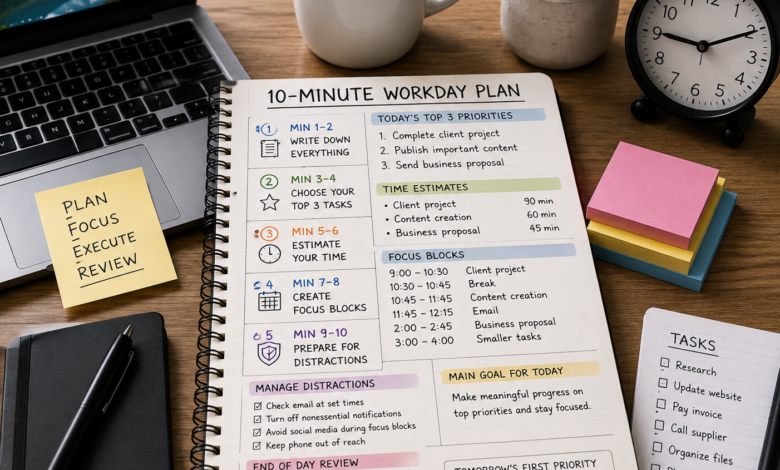
The 10-Minute Workday Planning Method
You can divide your planning routine into five simple steps.
Minute 1–2: Write Down Everything
Start by making a quick list of everything you need to handle.
Don’t organize the tasks yet. Simply get them out of your head.
For example:
- Complete a client project
- Answer important emails
- Write an article
- Update a website
- Attend a meeting
- Pay an invoice
- Follow up with a customer
Writing tasks down can make your workload feel more manageable.
Minute 3–4: Choose Your Top Three Tasks
Now identify the three tasks that matter most.
Ask yourself:
“Which three tasks would make today successful if I completed them?”
Your priorities should focus on meaningful results rather than simply choosing the easiest tasks.
For example:
- Complete client project
- Publish important content
- Send business proposal
These three tasks become the main focus of your day.
Minute 5–6: Estimate Your Time
Estimate how long each priority will take.
For example:
- Client project: 90 minutes
- Content creation: 60 minutes
- Business proposal: 45 minutes
Try to be realistic. If you underestimate everything, your schedule will quickly become overloaded.
It’s also useful to leave some extra time for unexpected tasks.
Minute 7–8: Create Focus Blocks
Now place your important tasks into your workday.
A simple schedule could look like this:
9:00–10:30: Client project
10:30–10:45: Break
10:45–11:45: Content creation
11:45–12:15: Email
2:00–2:45: Business proposal
3:00–4:00: Smaller tasks
During focus blocks, avoid unnecessary interruptions.
Minute 9–10: Prepare for Distractions
Think about what is most likely to interrupt you.
Common distractions include:
- Social media
- Phone notifications
- Unnecessary emails
- Messaging apps
- Random internet browsing
- Frequent meetings
Decide in advance how you’ll handle them.
For example, you could check messages at specific times rather than responding to every notification immediately.
Use the “One Main Task” Rule
Although you may have several priorities, try to focus on one major task at a time.
When you constantly switch between projects, you may lose time remembering where you left off.
Instead:
Start → Focus → Complete → Move to the next task
You can still handle urgent issues when necessary, but avoid switching simply because another task looks more interesting.
Schedule Email Instead of Checking It Constantly
Email can consume a large portion of the workday if you constantly monitor your inbox.
Unless your job requires immediate responses, consider checking email at specific times.
For example:
- Late morning
- Early afternoon
- Late afternoon
This allows you to protect your most productive hours for important work.
Don’t Fill Every Minute
A good workday plan should include some flexibility.
If you schedule every minute, one unexpected event can destroy your entire schedule.
Leave some open time for:
- Client requests
- Technical problems
- Meetings
- Administrative work
- Longer-than-expected tasks
A flexible schedule is easier to maintain than a perfect schedule.
Use a Simple Priority System
If you have a long task list, categorize tasks into three groups:
Must Do
Tasks that are important and should be completed today.
Should Do
Tasks that are useful but can move to another day if necessary.
Could Do
Optional tasks that you can complete if you have extra time.
This prevents less important tasks from taking over your entire day.
Take Regular Breaks
Productivity isn’t about working continuously for hours.
Short breaks can help you recover your attention and avoid mental fatigue.
During a break, consider:
- Walking around
- Stretching
- Drinking water
- Resting your eyes
- Stepping outside
Then return to your next focus block.
Keep Your Workspace Distraction-Free
Your environment can influence your ability to concentrate.
Before starting an important task:
- Close unnecessary browser tabs
- Silence nonessential notifications
- Put your phone away
- Keep only necessary applications open
- Remove unnecessary items from your workspace
The easier it is to focus, the less effort you’ll need to resist distractions.
Review Your Workday Before Finishing
Spend two or three minutes at the end of your workday reviewing your plan.
Ask yourself:
- Which tasks did I complete?
- Which tasks remain unfinished?
- What caused delays?
- Did I spend too much time on distractions?
- What should be my first priority tomorrow?
Move important unfinished tasks to tomorrow instead of keeping them in your head.
A Simple Daily Workday Template
You can copy this template into a notebook or notes app:
Today’s Top 3
Quick Tasks
Focus Blocks
- Morning: ______________
- Afternoon: _____________
- Late afternoon: _________
Email/Message Times
Main Goal for Today
This takes only a few minutes but can give your entire day a clear structure.
Common Workday Planning Mistakes
Planning Too Many Tasks
A huge to-do list can make you feel productive without actually helping you finish important work.
Choose fewer priorities.
Making Unrealistic Schedules
Don’t assume every task will take the minimum possible amount of time.
Add some flexibility.
Ignoring Breaks
Working without breaks can eventually reduce your focus.
Changing Your Plan Constantly
A plan should guide your day. Don’t completely change it every time a new small task appears.
Trying to Multitask
Focus on completing important tasks rather than constantly switching between them.
Final Thoughts
Learning how to plan your workday doesn’t need to be complicated. A 10-minute planning routine can help you identify your priorities, estimate your time, create focused work sessions, and prepare for common distractions.
The best productivity system is one that you can actually maintain. Start with this simple method for a week, track what works, and adjust your schedule based on your real workload.
You don’t need a perfect schedule. You simply need a clear plan for what matters most.