How to Stop Wasting Time Online: 9 Simple Productivity Hacks That Actually Work


How to Stop Wasting Time Online: 9 Simple Productivity Hacks That Actually Work
The internet can be an incredible productivity tool, but it can also become one of the biggest sources of wasted time. You may open your computer to complete one important task and, minutes later, find yourself scrolling through social media, watching videos, or reading unrelated articles.
The good news is that you don’t need to completely disconnect from the internet to become more productive. A few simple changes to your daily routine can help you stop wasting time online and focus on the work that actually matters.
Here are nine practical productivity hacks you can start using today.
1. Decide Your Most Important Task First
Before opening social media, email, or entertainment websites, decide what you need to accomplish.
Choose one task that would make your day feel successful if you completed it.
For example:
- Finish a client project
- Write an article
- Complete a report
- Study a specific topic
- Respond to important business messages
Starting with a clear priority reduces the chance of spending your morning on low-value activities.
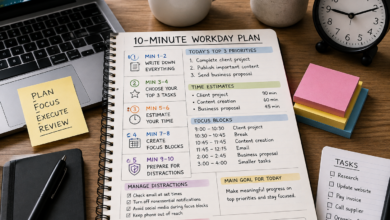
2. Use the 10-Minute Start Method
Sometimes the hardest part of a task is simply getting started.
Instead of telling yourself that you need to work for two or three hours, commit to working on the task for just 10 minutes.
During those 10 minutes:
- Close unnecessary tabs
- Put your phone away
- Start the task
- Avoid checking notifications
- Focus only on the current activity
Once you begin, continuing often feels easier.
3. Turn Off Unnecessary Notifications
Notifications constantly compete for your attention.
Email alerts, social media notifications, messaging apps, and website notifications can interrupt your concentration even when the message isn’t important.
Review your notification settings and turn off alerts that don’t require immediate attention.
You can keep notifications enabled for genuinely important communications while silencing everything else.
4. Create a Distraction-Free Browser Setup
Your browser may be one of your biggest productivity tools—or your biggest distraction.
Before starting focused work, close tabs that aren’t related to the task.
You can also create separate browser profiles for different activities, such as:
- Work
- Personal browsing
- Research
- Freelancing
- Study
Keeping work-related browsing separate can make it easier to stay focused.
5. Set Specific Times for Social Media
You don’t necessarily have to stop using social media.
Instead, give it a defined time.
For example, you could check social media:
- During a scheduled break
- After completing an important task
- At lunchtime
- In the evening
The goal isn’t to eliminate entertainment. It’s to prevent casual scrolling from taking over your workday.
6. Try Time Blocking
Time blocking means assigning specific periods of your day to specific activities.
For example:
9:00–10:30: Important project
10:30–10:45: Break
10:45–12:00: Client work
12:00–12:30: Email
2:00–3:00: Research
4:00–4:30: Social media
The exact schedule doesn’t matter as much as having a clear plan.
When you know what you’re supposed to be doing at a particular time, you’re less likely to switch randomly between tasks.
7. Use Website Limits When Necessary
If certain websites repeatedly distract you, consider using your browser’s built-in controls or a reputable website-blocking tool.
You can temporarily restrict access to distracting websites during focused work sessions.
Start with a short period, such as 30 or 60 minutes.
This creates a simple barrier between you and the websites you tend to visit automatically.
8. Stop Multitasking
Multitasking can feel productive, but constantly switching between activities can make it harder to maintain focus.
Instead of simultaneously checking email, messaging clients, browsing websites, and working on a document, try completing one task at a time.
For example:
Focus → Finish → Move to the next task
If something urgent appears, deal with it. Otherwise, keep your attention on the current priority.
9. Review How You Spend Your Time
One of the best ways to improve productivity is to understand where your time actually goes.
At the end of the day, ask yourself:
- What did I accomplish?
- What distracted me?
- Which websites consumed the most time?
- Which tasks took longer than expected?
- What can I change tomorrow?
You don’t need complicated productivity software. Even a simple note on your phone or computer can reveal patterns.
A Simple Daily Anti-Distraction Routine
If you want a simple system, try this routine:
Morning
- Choose your most important task.
- Turn off unnecessary notifications.
- Close unrelated browser tabs.
- Work for 45–60 minutes without distractions.
During the Day
- Take short breaks.
- Check email at planned times.
- Keep social media outside focused work periods.
- Work on one important task at a time.
Evening
- Review what you accomplished.
- Identify your biggest distraction.
- Choose tomorrow’s priority.
- Prepare your workspace for the next day.
Don’t Try to Change Everything at Once
A common productivity mistake is trying to completely redesign your routine overnight.
Instead, choose two or three changes and practice them consistently.
For example, start by:
- Turning off unnecessary notifications
- Using time blocking
- Setting specific social media times
Once these habits become natural, add another productivity technique.
Small improvements can become powerful when you use them consistently.
Final Thoughts
Learning to stop wasting time online isn’t about avoiding the internet completely. It’s about controlling when and how you use it.
Start by identifying your most important task, reducing notifications, limiting distractions, scheduling social media, and working on one task at a time.
You don’t need a complicated productivity system. A few simple habits, repeated every day, can help you spend less time distracted and more time accomplishing meaningful work.